Additional information
| Engraver | Frederick Girsch |
|---|---|
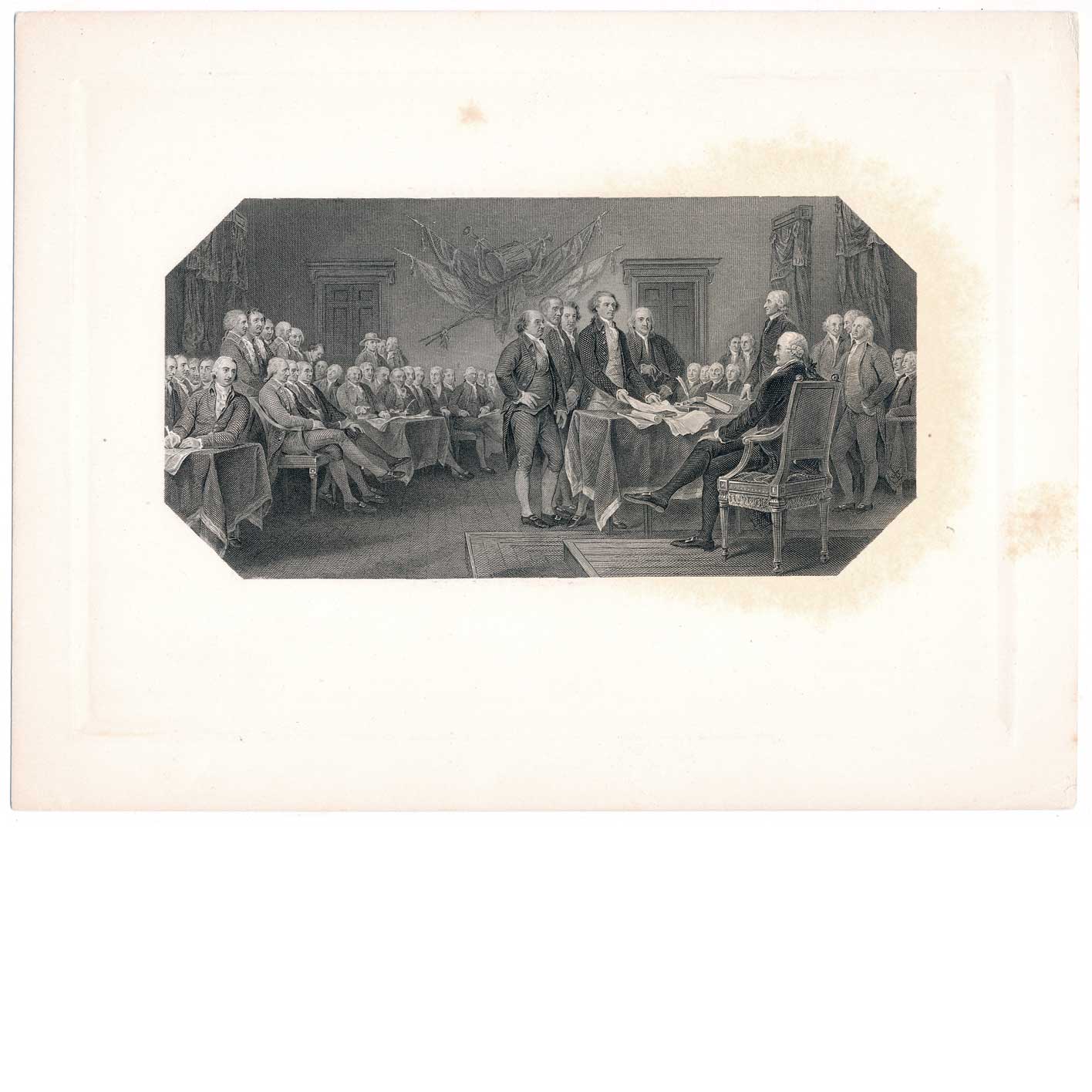
| Condition | VF, light foxing right side |
| Paper | die sunk card |
| Size | 5.5" x 3"; overall 8" x 6" |

$400.00
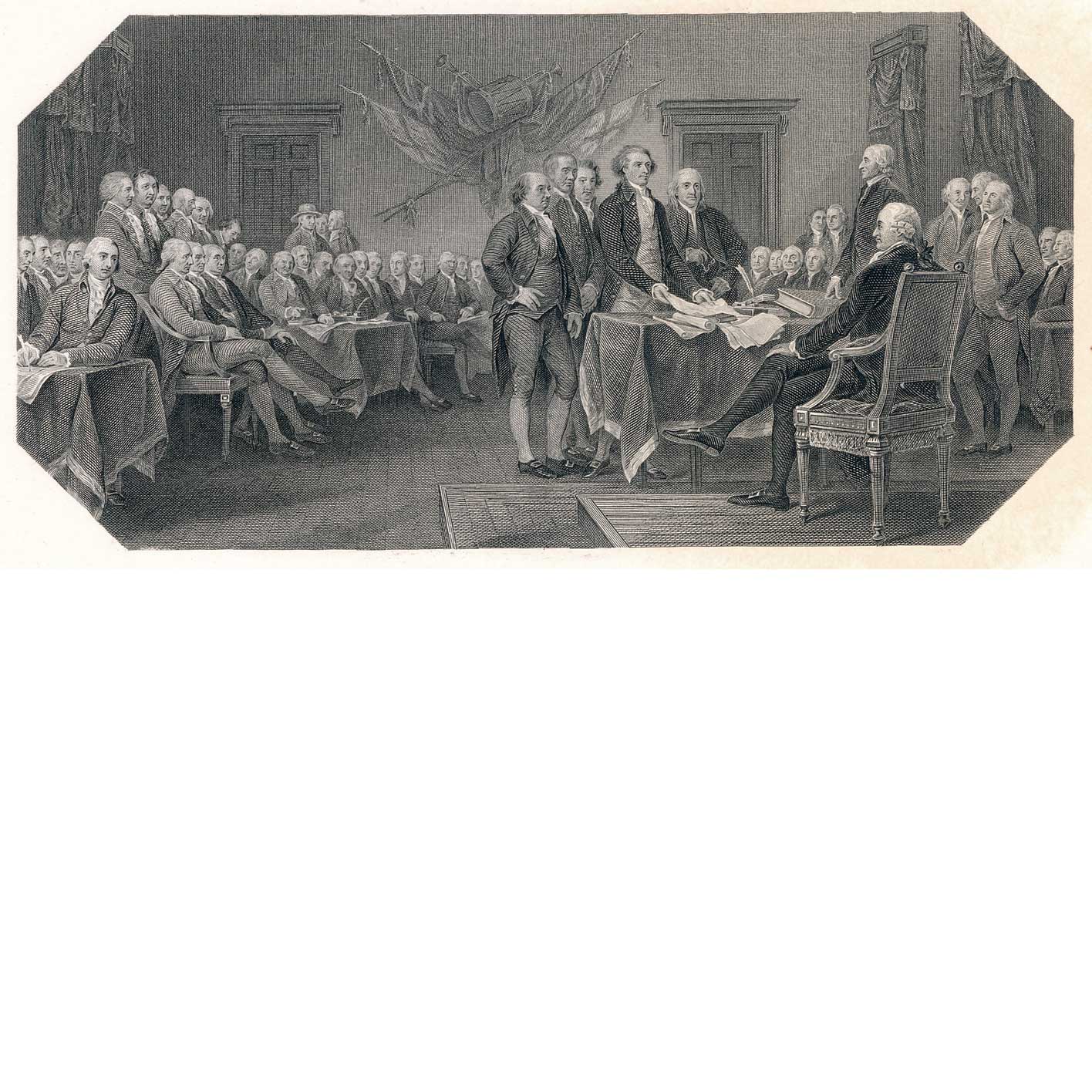
This die proof vignette of the Signing of the Declaration of Independence is an exquisite steel engraving produced by the Bureau of Engraving and Printing (BEP), adapted from the iconic 1818 oil-on-canvas painting by John Trumbull. Often mistaken for the actual signing, the scene accurately depicts the five-man drafting committee—comprised of John Adams, Roger Sherman, Robert Livingston, Thomas Jefferson, and Benjamin Franklin—presenting their work to John Hancock and the Continental Congress on June 28, 1776. While the original painting features 47 figures, this masterful vignette has been famously immortalized on the reverse of the United States $2 bill and has appeared on various commemorative postage stamps, serving as a powerful visual icon of American independence.
The Bureau of Engraving and Printing (BEP) is a government agency within the United States Department of the Treasury designing and producing a variety of security products for the U.S. Government, most notable of which is paper currency for the Federal Reserve Bank. BEP also produces Treasury securities, military and government commissions, award certificates, and many different types of identification cards and similar items.
The BEP has its origins in legislation enacted to help fund the Civil War. In July 1861, Congress authorized the Secretary of the Treasury to issue paper currency in lieu of coin due to shortfalls in funds to support the conflict. The paper notes were essentially government IOUs and were called Demand Notes, because they were payable “on demand” in coin at certain Treasury facilities. The government had no facility for the production of paper money so a private firm produced Demand Notes in sheets of four. These sheets were sent to the Treasury Department where they were signed and hand cut. The currency processing operations in the Treasury were not formally organized. When Congress created the Office of Comptroller of the Currency and National Currency Bureau in 1863, currency processing operations were nominally subordinated to that agency. It was not until 1874 that the “Bureau of Engraving and Printing” was officially established in congressional legislation.
| Engraver | Frederick Girsch |
|---|---|
| Condition | VF, light foxing right side |
| Paper | die sunk card |
| Size | 5.5" x 3"; overall 8" x 6" |