Additional information
| Condition | VF |
|---|---|
| Year | 1860s |
| Paper | india |
| Size | 4.5" x 2.5" |

$50.00
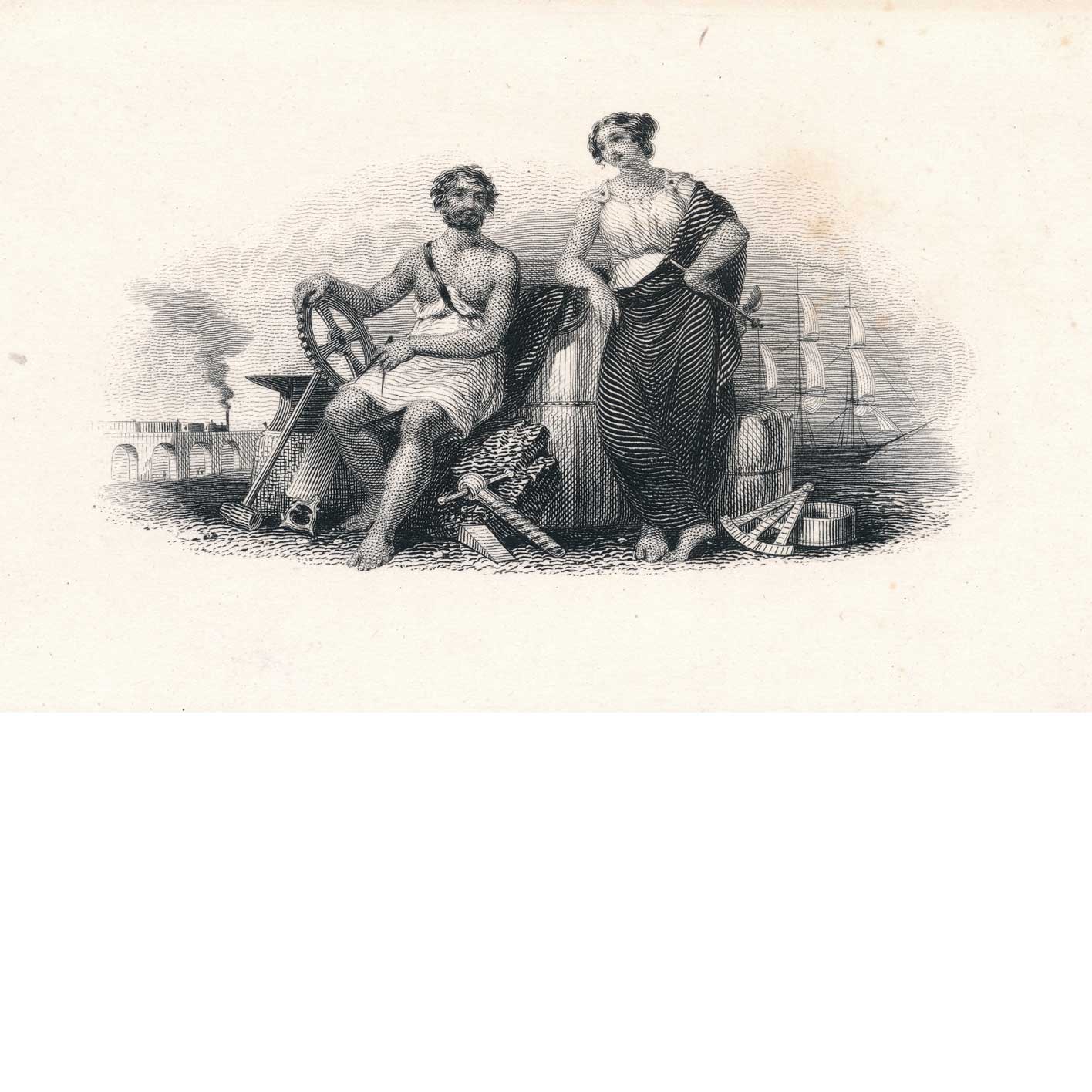
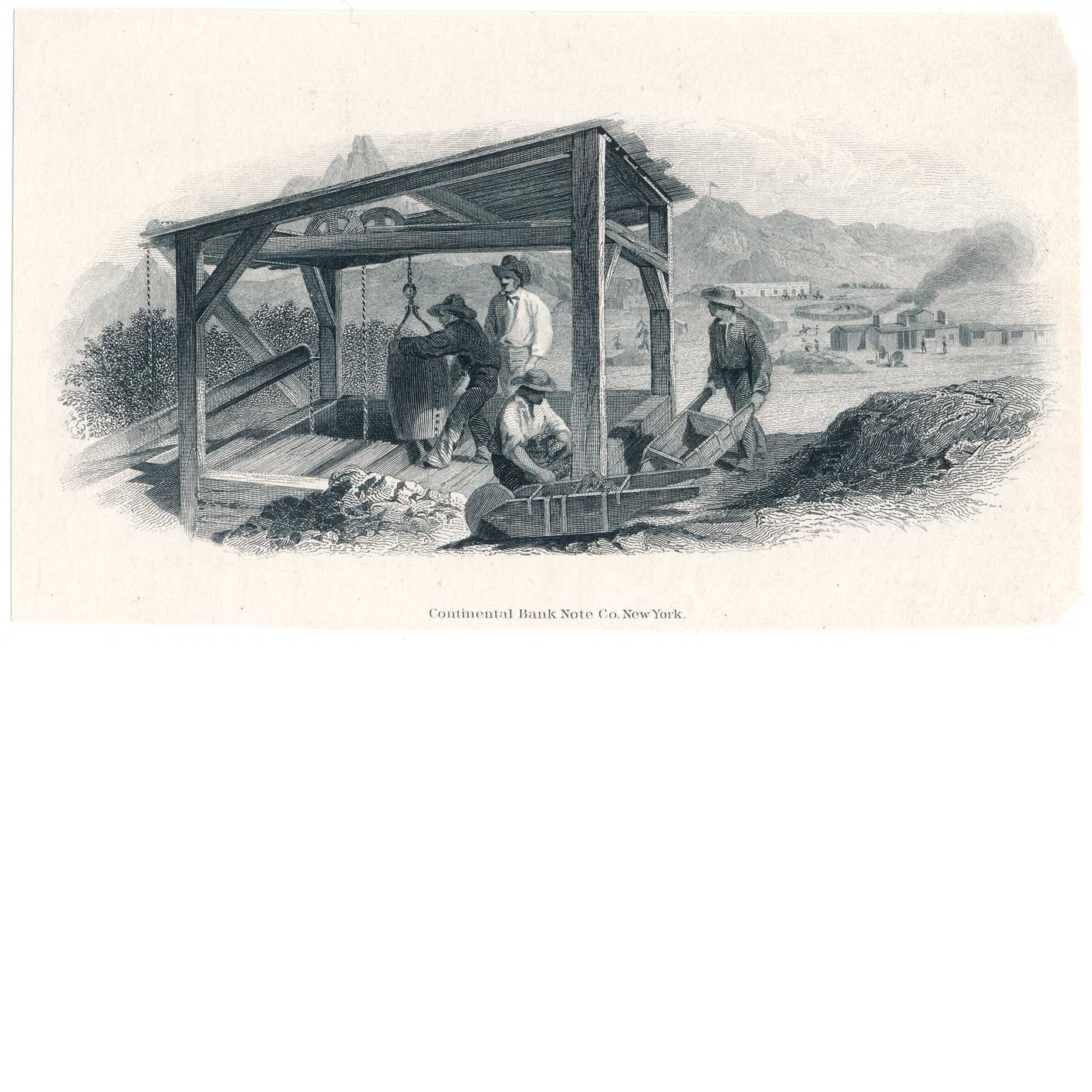
This 1860s intaglio vignette die proof, printed on delicate India paper by the Continental Bank Note Company of New York, depicts a detailed mining scene. The engraving features laborers working under a heavy timber-framed structure; one man maneuvers a large, suspended barrel or bucket, while others nearby handle tools and a long wooden trough, possibly for sorting or washing minerals. In the background, a settled industrial landscape unfolds with multiple buildings and a smoking chimney, set against a backdrop of rugged hills or mountains. This type of expertly crafted vignette was typically created for use on security documents such as bank notes, checks, or bonds during the mid-to-late 19th century. The use of thin India paper allowed the engraver to showcase the exceptional fine-line detail and subtle shading that were hallmarks of the Continental Bank Note Company’s high-quality security printing.
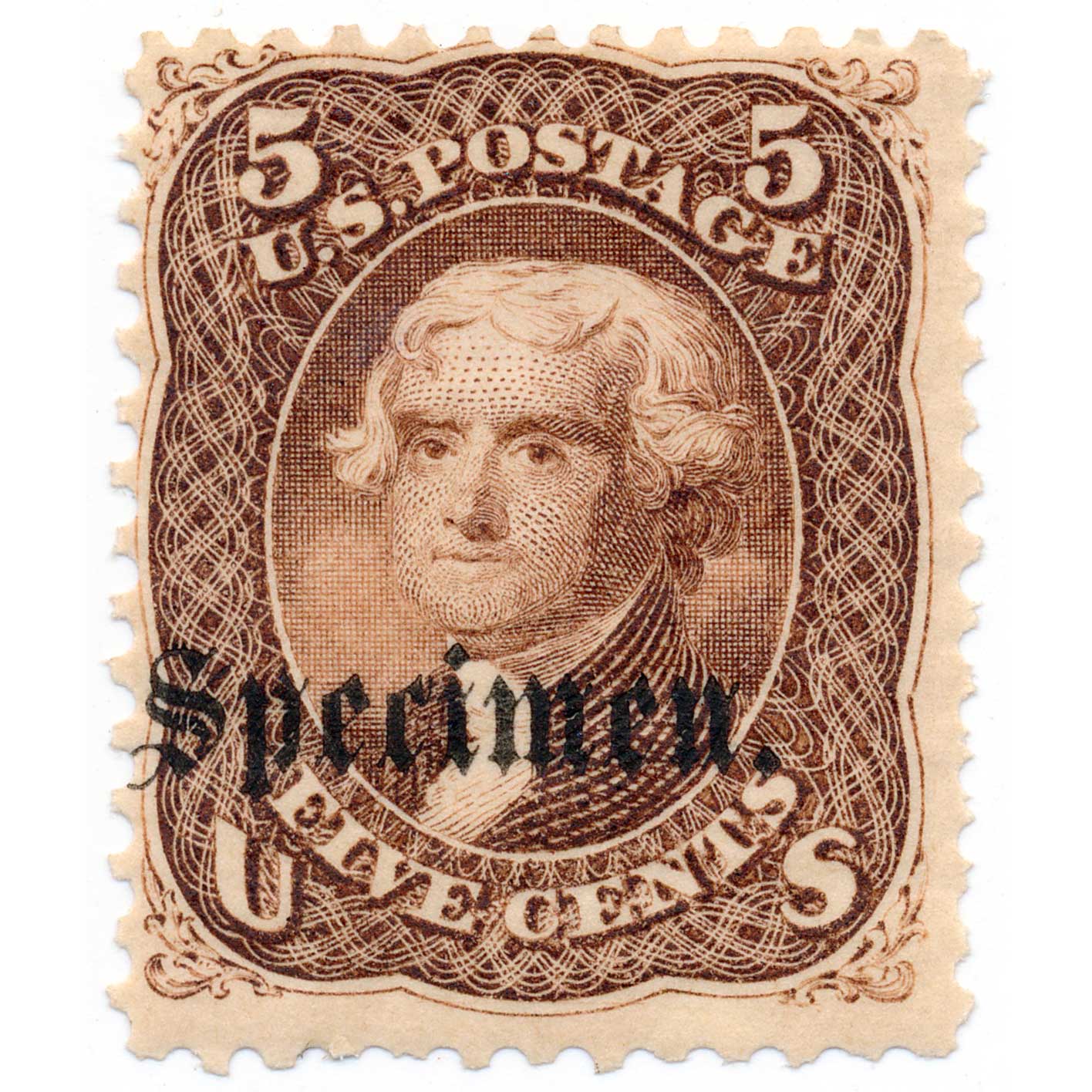
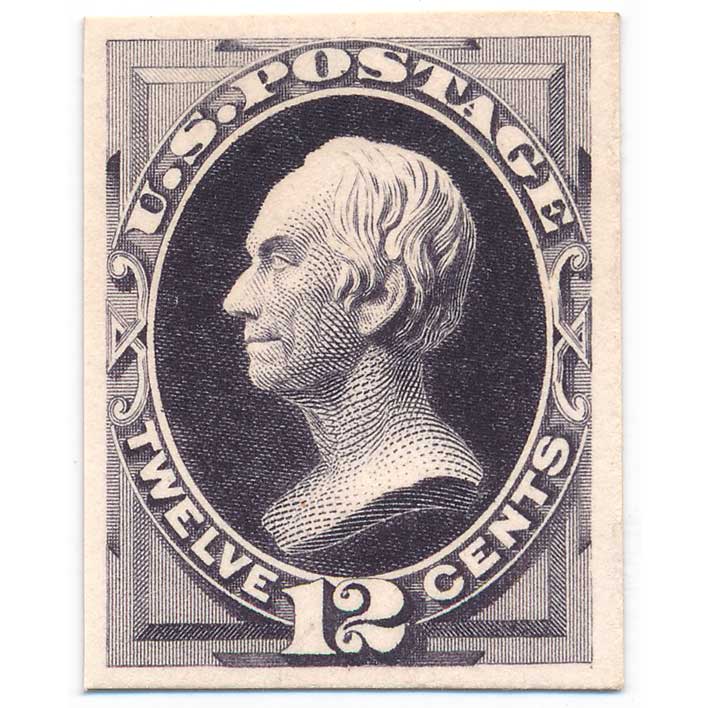
The Continental Bank Note Co. was founded in January, 1863, by the members of firms who did independent engraving. The main office was at 142-146 Greenwich Street, New York City. In 1866 the firm had a Nassau Street office, and in 1873 it had a printing plant on William Street. During 1874-76 the firm also had a plant at 120 Broadway. The Revenue Act of Feb. 25, 1862, authorized an issue of legal tender notes in denominations of $5 to $1,000. To compete for this new business, against the American and National Bank Note Companies, conditions warranted the smaller firms to consolidate, which they did, and operations commenced in March, 1863. On April 11, 1863, Continental submitted models and bids i, competition for the Treasury notes. On May 26 it was awarded a contract for the only notes authorized-the National Currency $5 and $10 notes. During the 1860s, Continental also had contracts for tax paid revenue stamps. It submitted bids and models for the 1869 issue of postage stamps but was unsuccessful. In January, 1873, Continental was successful in securing the contract for postage stamps, and again in 1877 it secured the contract. At the time of the merger with the American Bank Note Company, the contract was transferred to that firm for fulfillment. During the existence of the Continental Bank Note Company, it had some of the ablest designers and engravers on its staff. Many continued their profession with the American Bank Note Co.
| Condition | VF |
|---|---|
| Year | 1860s |
| Paper | india |
| Size | 4.5" x 2.5" |